 +916265011977
  support@moolmaati.in
Tribal Communities and Their Deep Connection with Nature

Living in Harmony with the Natural World
For thousands of years, indigenous and tribal communities have lived in close relationship with nature. Forests, rivers, mountains, wildlife, and seasonal cycles are not merely resources for survival—they are integral parts of cultural identity, spirituality, and daily life.
Across India, tribal communities have developed unique ways of understanding and interacting with the environment. Their traditions, stories, rituals, and artistic expressions reflect a profound respect for the natural world and a belief that all living beings are interconnected.
This deep bond with nature continues to inspire some of the country’s most remarkable art forms, including Gond, Warli, Bhil, and Saura art.
Nature as a Source of Life and Wisdom
For many tribal communities, nature is viewed as a living entity rather than something separate from human existence.
Forests provide food, medicine, shelter, and livelihoods. Rivers sustain agriculture and community life. Animals are often regarded as spiritual guides, protectors, or symbols of ancestral connections.
Traditional knowledge passed down through generations teaches communities how to coexist sustainably with their surroundings, ensuring that natural resources are used responsibly and preserved for future generations.
This relationship is built on respect rather than exploitation.
Storytelling Through Art
Art has long served as a powerful medium through which tribal communities express their understanding of nature.
Through paintings, murals, carvings, and crafts, artists depict:
- Sacred trees and forests
- Birds and wildlife
- Rivers and water bodies
- Agricultural cycles
- Ancestral spirits
- Mythological creatures
- Human relationships with the environment
These visual narratives preserve cultural knowledge and communicate important lessons about balance, harmony, and environmental stewardship.
Every symbol tells a story, and every artwork becomes a reflection of the community’s connection to the natural world.
The Natural World in Gond Art
Among India’s tribal art traditions, Gond art is particularly known for its celebration of nature.
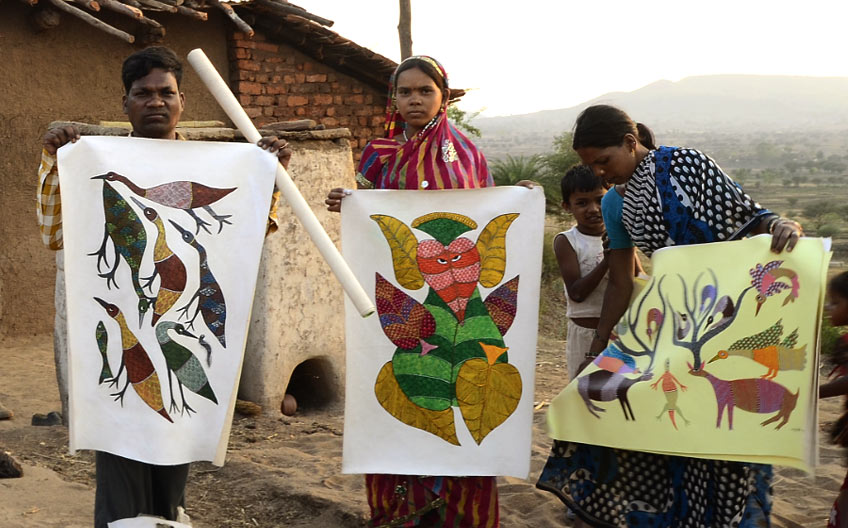
Artists often portray animals, birds, trees, fish, and landscapes using intricate patterns and vibrant colors. Rather than painting nature realistically, Gond artists infuse living beings with energy and movement through detailed lines, dots, and textures.
In Gond belief systems, every element of nature possesses its own spirit and significance.
A tree may represent life and growth. Birds symbolize freedom and communication. Tigers and deer often embody strength, wisdom, or coexistence within the forest ecosystem.
Through these artistic expressions, Gond painters transform everyday natural elements into powerful visual stories.
Wildlife as Cultural Identity
Wildlife occupies a special place in many tribal traditions.
Animals frequently appear in folklore, songs, rituals, and visual art. They are often seen as companions, guardians, or messengers between the human and spiritual worlds.
Paintings featuring peacocks, deer, elephants, fish, snakes, and tigers are not simply decorative. They represent centuries of observation, respect, and coexistence with the surrounding environment.
By celebrating wildlife through art, tribal communities reinforce their role as custodians of biodiversity and ecological knowledge.
Traditional Ecological Knowledge
Long before the emergence of modern environmental science, indigenous communities practiced sustainable living based on observation and experience.
Many tribal societies developed sophisticated knowledge about:
- Seasonal weather patterns
- Forest ecosystems
- Medicinal plants
- Wildlife behavior
- Water conservation
- Sustainable harvesting practices
This traditional ecological wisdom continues to offer valuable insights into conservation and environmental protection.
As the world faces growing ecological challenges, indigenous knowledge systems are increasingly recognized as important contributors to sustainable development.
Art as a Tool for Conservation
Tribal art does more than preserve cultural traditions—it also helps raise awareness about environmental issues.
By depicting forests, wildlife, and ecological relationships, artists encourage viewers to appreciate and protect nature.
Their work serves as a reminder that environmental conservation is not just a scientific concern but also a cultural responsibility.
Many contemporary tribal artists use their paintings to highlight themes such as biodiversity, deforestation, climate change, and the importance of preserving indigenous lands.
Lessons for the Modern World
In today’s rapidly urbanizing world, the relationship between people and nature is often weakened.
Tribal communities offer an alternative perspective—one based on balance, gratitude, and coexistence.
Their traditions teach us that humans are part of nature rather than separate from it. Their art reminds us that every tree, river, bird, and animal contributes to a larger interconnected system of life.
These lessons are more relevant today than ever before.
Conclusion
The deep connection between tribal communities and nature is reflected in every aspect of their culture—from their stories and rituals to their art and daily practices.
Through vibrant paintings and timeless traditions, indigenous artists continue to celebrate the beauty, wisdom, and spirit of the natural world. Their work serves as both a cultural treasure and a powerful reminder of the importance of living in harmony with our environment.
As we admire tribal art, we are also invited to rediscover our own relationship with nature and recognize the value of preserving both cultural and ecological heritage for future generations.